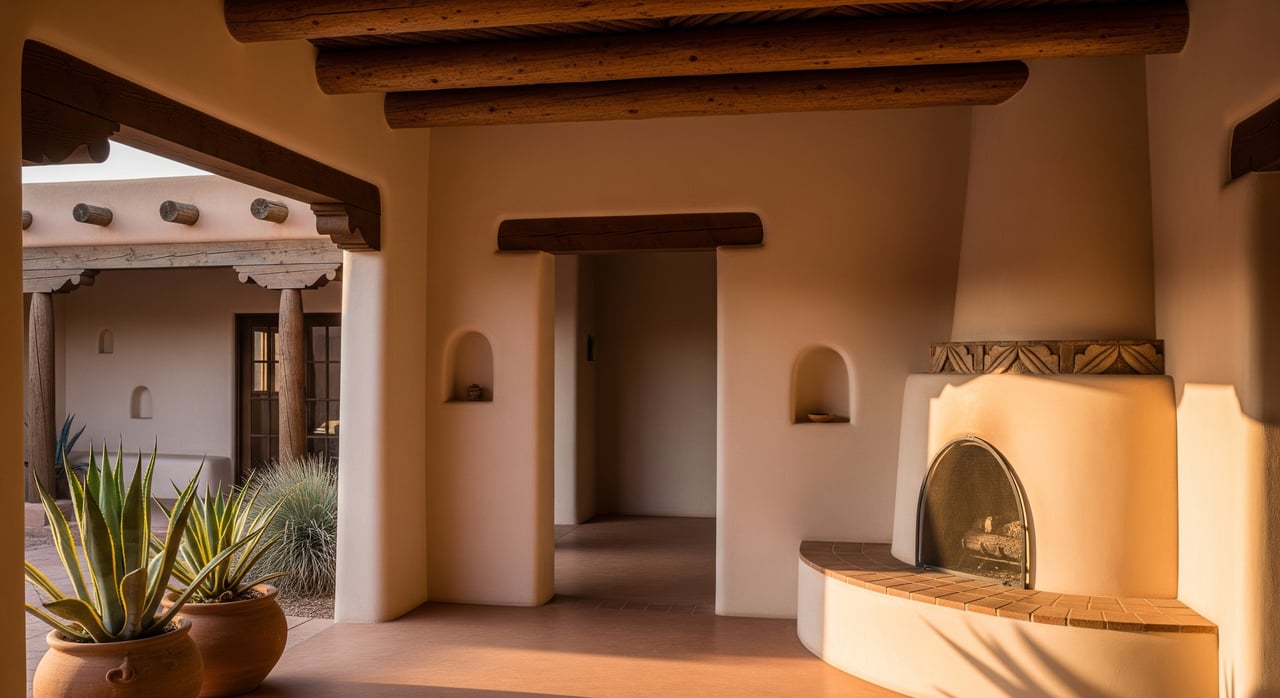
If you love the soft glow of a rounded hearth and the rhythm of timbered ceilings, you’re not alone. In Santa Fe’s Historic Eastside, features like kiva fireplaces, vigas, portals, and nichos are more than “style” — they’re part of a living building tradition with specific care and permit considerations. If you’re buying or selling here, understanding what’s authentic, what’s updated, and how to maintain these elements will help you protect both beauty and value. This guide breaks it down in clear, practical terms so you can move forward with confidence. Let’s dive in.
Historic Eastside context
Homes in the Historic Eastside reflect Pueblo, Spanish Colonial, Territorial, and Pueblo Revival traditions. Walls are typically adobe with earthen or lime plaster, roofs are flat or gently pitched, and wood elements are exposed. For background on materials and preservation, explore the Historic Santa Fe Foundation and the National Park Service’s Preservation Brief 29 on adobe.
Because many properties sit in locally regulated historic districts, exterior changes that affect visible character often need review. Before altering rooflines, projecting vigas, portal configurations, or exterior finishes, check the City’s guidelines through the City of Santa Fe Historic Preservation office.
Kiva fireplace basics
A kiva fireplace is a rounded, beehive-like hearth with a smooth plastered interior and an intimate scale. The domestic form draws inspiration from Indigenous Southwestern architecture; for cultural background, see Britannica’s overview of kivas. Today, kiva fireplaces are used for heat and ambiance. Many are wood burning, though some have been converted to gas for convenience and emissions control.
Kiva authenticity cues
- Thick, continuous earthen plaster with subtle irregularity suggests an older or traditionally finished hearth.
- Modern refractory tile or drywall inside a rounded opening can signal a later retrofit.
- Look for a mellow, hand-finished surface rather than a hard, glossy paint that can trap moisture.
Kiva safety and code
Modern conversions and inserts must meet building codes and chimney standards, including NFPA guidance. Learn more at NFPA. For clean burning practices and wood smoke guidance, see the EPA’s Burn Wise resources. Annual chimney inspection and cleaning are recommended for active wood-burning setups.
Kiva quick checks
- Ask whether the fireplace was converted to gas and request permits or installation records.
- Inspect for cracked flues or liners, soot staining, and plaster cracks near the opening.
- Confirm safe hearth clearances to combustibles and consider a professional Level II inspection.
Vigas overview
Vigas are large, exposed roof beams that carry the roof and often project through exterior walls. In many historic homes, they are structural. In some later homes, they are purely decorative.
Viga authenticity cues
- Structural vigas are often full logs with irregular diameters and visible weathering at the exterior ends.
- Decorative or faux vigas may be uniform, hollow, or very regularly spaced without true penetration into thick walls.
Viga maintenance tips
Water is the main enemy. Where vigas pass through adobe, poor flashing or sealing can allow moisture intrusion. Rot and insect activity are common issues. Repair-in-kind is preferred, using similar wood species and sizes, and maintaining breathable wall finishes to avoid trapping moisture.
Viga inspection quick list
- Check exposed ends for rot, insect activity, or soft spots. Look at the roofline for sagging.
- Inspect where vigas penetrate the wall for staining or failed flashing.
- Inside, look for cracks at the viga-to-ceiling junction that may indicate movement.
Portals explained
A portal is a covered porch or walkway that shades exterior walls and creates a graceful indoor-outdoor transition. Posts, corbels, and continuous overhangs are common cues. Portals are central to Santa Fe’s façade rhythm and daily living.
Portal maintenance tips
Posts can rot at their bases, especially where they bear on masonry or adobe without proper footings. Portal roofs require good drainage and flashing to keep water away from walls and beam penetrations. Regularly clear scuppers and check membranes.
Portal inspection quick list
- Confirm posts rest on protected footings rather than directly on adobe or soil.
- Look for ponding on flat roof areas and any signs of leaks at the portal junction.
Nichos in context
Nichos are small recessed wall niches used historically for devotional objects or small displays. In thick adobe walls, these recesses have depth and presence, and they remain a beloved detail in Pueblo Revival and Territorial interiors.
Nicho care
Because nichos are set in earthen plaster, moisture and incompatible coatings can cause deterioration. Avoid hard, impermeable finishes that may trap humidity in adobe substrates.
Preservation and permits
In the Historic Eastside, exterior changes visible from public ways typically require review. This includes altering portal posts, roof forms, or projecting vigas, and applying modern exterior coatings. Before starting any work, consult the City of Santa Fe Historic Preservation office. For broader preservation standards and technical guidance, explore the National Park Service Preservation Briefs index. If you are exploring incentives or state-level resources, the New Mexico Historic Preservation Division is a helpful starting point.
Hiring the right specialists
Historic materials perform best with skilled, preservation-aware care. Look for contractors and inspectors experienced with adobe, earthen plaster, and historic woodwork. The Historic Santa Fe Foundation and the City’s preservation staff can provide guidance and resources. When in doubt, use minimal, compatible, and reversible repair methods whenever possible.
Buyer and seller due diligence
Use this quick list to frame your evaluation and pre-list prep:
Kiva fireplaces
- Confirm gas conversions or inserts with permits and documentation.
- Schedule an annual chimney inspection for active wood-burning units.
- Check for cracks, soot staining, and correct clearances.
Vigas
- Probe exposed ends for soft wood and inspect flashing at wall penetrations.
- Look for staining below viga ends and ceiling cracks at beam junctions.
Portals
- Verify posts sit on protected footings and not directly on adobe or soil.
- Confirm roof drainage is clear and membranes are intact.
Nichos and plaster
- Watch for soft plaster, mismatched patches, or glossy coatings that may indicate moisture issues.
Balancing upgrades and preservation
If you plan to modernize, prioritize reversible approaches that protect original fabric. For example, a removable gas log appliance can deliver convenience while preserving the hearth form. Use breathable repair materials in line with Preservation Brief 29. Always confirm whether historic review or permits are required through the City of Santa Fe Historic Preservation office before changing exterior elements.
A preservation-minded approach often supports long-term value, comfort, and ease of resale. It also safeguards the character that makes the Historic Eastside so compelling.
Ready to evaluate a property or prepare yours for market with confidence and care? Connect with Rachele Griego for preservation-aware guidance and concierge-level support.
FAQs
How do I tell if a kiva fireplace is original?
- Look for continuous earthen plaster, subtle irregularity, and long-term wear rather than modern refractory tile or sharp drywall edges.
Are the vigas in a Santa Fe home structural or decorative?
- Structural vigas are often full logs that penetrate thick walls, while purely decorative versions tend to be uniform, hollow, or very regularly spaced.
How often should a kiva chimney be cleaned and inspected?
- For active wood-burning fireplaces, schedule a professional inspection and cleaning annually and sooner with heavy seasonal use.
Can I enclose a portal or change portal posts in the Historic Eastside?
- It may be possible, but you should expect permits and historic review for exterior changes visible from public ways.
What is the most common maintenance issue with vigas and portals?
- Water intrusion at beam penetrations and post bases is the most frequent issue, so prioritize flashing, drainage, and breathable finishes.
