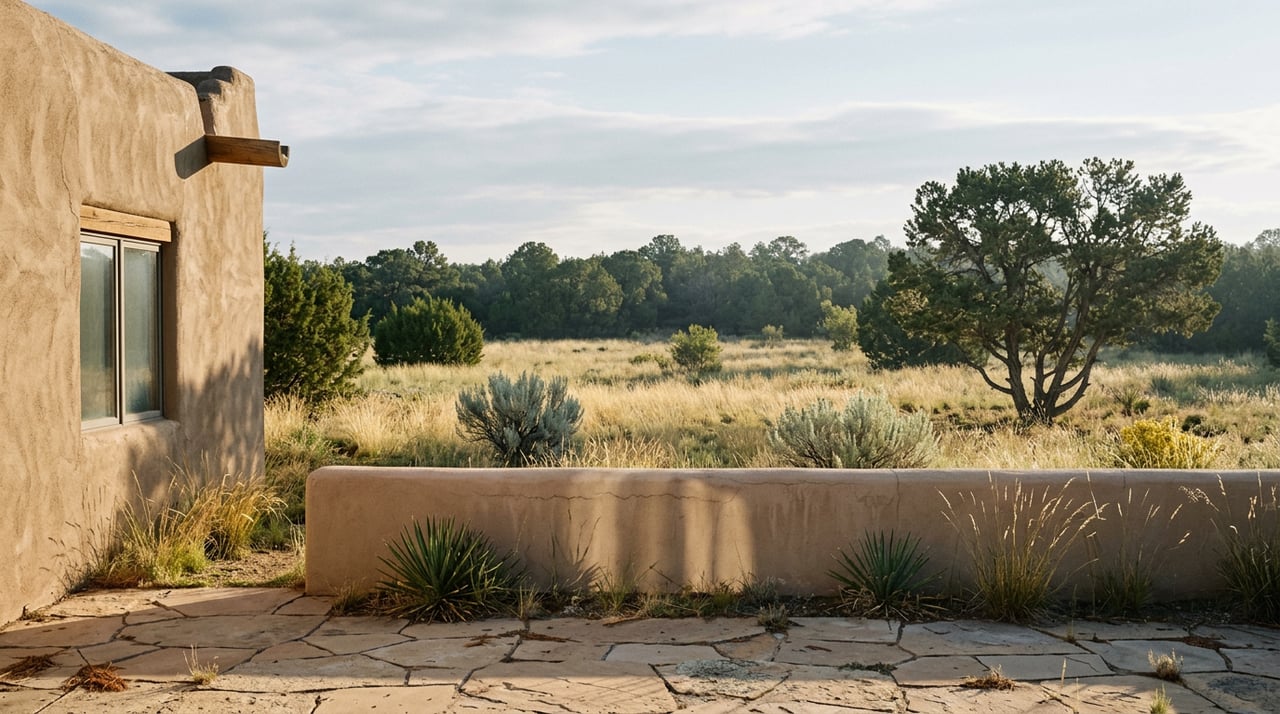
Last October, a volunteer named Harper walked back out to a stretch of La Tierra Trails between markers 1 and 7 to check on a reroute he had helped build the year before, after monsoon rains washed out the original path. He had covered the old section with rocks and brush so it could rest. Instead he found both trails open at once, the old one uncovered and back in use alongside the new. Nobody in charge had decided which one should win, and as of that fall, nobody had fixed it. That small, unresolved fork says more about how these trails actually work than any map does, and it is worth holding onto as you read about the much larger fight that just wrapped up a few hundred yards from that same trail network.
On June 30, Santa Fe County commissioners voted 3-2 to reject the Camino Verde subdivision, a proposed 158-home development on 304 acres straddling Camino La Tierra just north of Highway 599 and east of Las Campanas, according to the Santa Fe New Mexican. For residents who hike, bike, or ride horses on La Tierra Trails, the vote reads like an ending. It isn't one. The land is still privately owned, still undeveloped, and still capable of coming back before the county in some other form. What the vote actually did was expose how much of the trail access this neighborhood relies on has never rested on anything more permanent than tolerance.
How We Got to a 3-2 Vote
The path from proposal to rejection took four months and multiple public bodies, which is itself worth understanding if you plan to follow whatever comes next.
| Date | What happened |
|---|---|
| April 9, 2026 | County land use hearing officer Taylor Hartstein heard testimony on three technical variances: reduced side and rear setbacks (25 feet to 10 feet), tighter driveway spacing near intersections, and disturbance of slopes over 30 percent for erosion control |
| May 21, 2026 | The variance requests went to the Santa Fe County Planning Commission |
| June 9, 2026 | More than 100 speakers turned out for a marathon hearing on the conceptual plan itself, which proposed four phases of development and more than 50 percent permanent open space |
| June 30, 2026 | County commissioners voted 3-2 to reject the conceptual plan after an earlier eight-hour meeting had ended in a 4-0 vote just to delay |
The developer, Chicago-based Samara Real Property, worked through local development management firm JenkinsGavin. Agent Jennifer Jenkins argued the design followed the county's 2016 push toward clustered development, trading smaller lots for permanently protected open space and trail easements, including preservation of the historic Chili Line rail bed. County documents put the lot sizes between 0.24 and 3.67 acres, with 18 of the 158 homes designated as affordable under county ordinance. The project would have connected to the county's public water system with an estimated annual demand of 12.8 million gallons.
Commission Chair Justin Greene raised traffic as a central concern, citing New Mexico Department of Transportation crash data covering ten intersections along the corridor, all of which he said carried existing safety concerns before a single new home was added.
The Case Against, in the Neighbors' Own Words
Opposition came from several directions at once. Northwest Residents United argued the variance requests moved forward before the public ever had a chance to weigh in on the conceptual plan itself. La Mariposa Homeowners Association's fire safety chair, William Feiereisen, told commissioners the area already carries a high fire danger rating with limited department support, and warned that Camino Verde "creates a chokepoint on the only viable evacuation route for hundreds, if not 1,000, homes to the north and west," a concern serious enough that opponents had already raised more than $62,000 toward a $250,000 legal fund within days of launching it back in April, according to reporting on the opposition campaign.
Tom Linton, who has lived in Las Campanas for more than three decades, put the stakes in simpler terms at the June meeting.
"Part of the attraction of the area was the welcome tranquility provided by the acres of open land."
That tranquility, though, was never something anyone owned. County documents describe current trail access plainly: people already park along Camino La Tierra and cross the private, undeveloped parcels to reach the public La Tierra Trails system. That has been true for years, and it will remain true after this vote. The commission blocked one specific proposal. It did not place the land in a conservation easement, buy it, or guarantee that the next owner won't bring a different plan back through a similar hearing process.
The Smaller Fight That Tells the Same Story
That is where the trail reroute from last fall becomes relevant again. The Santa Fe Conservation Trust maintains La Tierra Trails' 25 miles of hiking, biking, and equestrian paths under a contract with the city, alongside a separate Buckman Track set aside for motorcycles and ATVs. Tim Rogers, the Trust's trails program manager, is described in Santa Fe New Mexican reporting as the only person in the city who does trail maintenance in a paid capacity. Everyone else, including the volunteer who built the disputed reroute after leaving a dispute with his own mountain biking club, works for free.
That structure isn't a flaw specific to one trail segment. It's the operating model for the entire system. Decisions about which path stays open, how erosion gets managed, and whether a historic rail bed becomes an interpretive trail all run through a small nonprofit, a volunteer alliance, and whatever goodwill exists between them and the county in a given year. The Trust is also working with the Grand Unified Santa Fe Trail Organization, a coalition of city, county, and Forest Service partners, on longer-term trail connections, but coordination among five or six organizations is a different thing than ownership.
What This Means If You're Out There This Month
None of this should change how you use the trails today. It should change what you assume about them.
- Parking along Camino La Tierra to access the trail system crosses private land by informal use, not by right. That access held through this development fight, but it isn't recorded anywhere as permanent.
- The Buckman Track remains the separate, designated area for motorized recreation. Riders looking to keep the main trail system quiet for hikers and horses should stay on it.
- If you notice both an old and new trail segment near markers 1 and 7, that's not a wrong turn. It's an unresolved maintenance question that has been sitting there since last year.
- The Santa Fe Conservation Trust runs periodic volunteer work days, typically meeting at the mailboxes on Camino La Tierra about half a mile north of the Relief Route before carpooling in, for anyone who wants a hand in how the trails actually get shaped.
- Watch for whatever Samara Real Property or a future buyer proposes next. A rejected conceptual plan can return revised, and a similar multi-stage hearing process would likely apply.
The Camino Verde vote was a genuine win for the people who organized against it, and it bought the corridor time. But the open land east of Las Campanas is still zoned exactly as it was in April, still privately held, and still one purchase away from a different conversation. The trails you walked this weekend are the same trails they were in May. The ground they sit on is less settled than the vote made it feel.
If you're weighing what a home along this corridor is really worth, given how its trails, land, and access actually work day to day, Rachele Griego has spent a career reading Santa Fe's neighborhoods at exactly this level of detail. Let's connect and talk through what you're seeing on the ground.
