Trying to choose between two of Santa Fe’s most cultural addresses can feel like comparing turquoise to silver. You love art, architecture, and the outdoors, and you want a home that fits how you live day to day. In this guide, you’ll learn how Old Santa Fe Trail/Museum Hill and the Historic Eastside stack up on walkability, lot size and privacy, architecture and rules, and outdoor access. By the end, you’ll see which neighborhood best matches your lifestyle. Let’s dive in.
Two cultural hubs, two lifestyles
Both areas put you close to what makes Santa Fe special. Museum Hill centers on a hilltop campus of museums and a botanical garden, while the Eastside places you within blocks of Canyon Road galleries and the Plaza. The feel is different in each location, and that difference shapes daily life.
Cultural access and walkability
Museum Hill at your doorstep
Living near Museum Hill means world-class institutions are minutes away. The campus includes the Museum of International Folk Art, the Museum of Indian Arts & Culture, the Museum of Spanish Colonial Art, the Wheelwright Museum, and the Santa Fe Botanical Garden, along with a café on the hill. These sit together off Old Santa Fe Trail on Camino Lejo, which makes museum programming and special events especially convenient if that is part of your routine. You can confirm locations and visitor details through the Museum of International Folk Art and the Santa Fe Botanical Garden.
You are not directly adjacent to the Plaza here. Most residents make a short drive to Canyon Road or downtown, typically in the 1 to 2.5 mile range depending on your exact starting point and route. Travel guides describe the trip in single-digit minutes, which aligns with the hill’s close but not in-the-thick-of-it setting, as noted by Forbes.
Eastside and Canyon Road on foot
The Historic Eastside gives you day-to-day walkability to galleries, dining, and the Plaza. Canyon Road is Santa Fe’s most concentrated art district, with dozens of galleries and restaurants. Many Eastside homes are within a short walk to the Plaza as well, a key reason buyers choose the neighborhood for an active, on-foot lifestyle. Explore the neighborhood overview on Homes.com’s Canyon Road guide.
Lot sizes and privacy
Old Santa Fe Trail: room to spread out
As you follow Old Santa Fe Trail toward the foothills, you see a pattern of larger parcels. Many homes sit on lots around one acre or more, with multi-acre estates also present. That space translates into more separation from neighbors, broader outdoor living areas, and often long views that come with the hilltop and foothill topography. If you value privacy and elbow room, this corridor tends to deliver it.
For exact parcel sizes and boundaries when you narrow your search, verify details through Santa Fe County records using the Assessor’s Help Guide.
Historic Eastside: intimate in-town parcels
The Eastside is an in-town, walkable grid of historic adobes, walled gardens, and courtyards set on smaller lots. Typical parcels run from several thousand square feet to a few tenths of an acre. Yards and setbacks are tighter, which creates a charming, intimate feel and makes daily life very pedestrian friendly. The tradeoff is less outdoor acreage compared with Old Santa Fe Trail. For a sense of neighborhood character and amenities, review the Canyon Road area overview.
Architecture and preservation
Eastside’s protected Santa Fe style
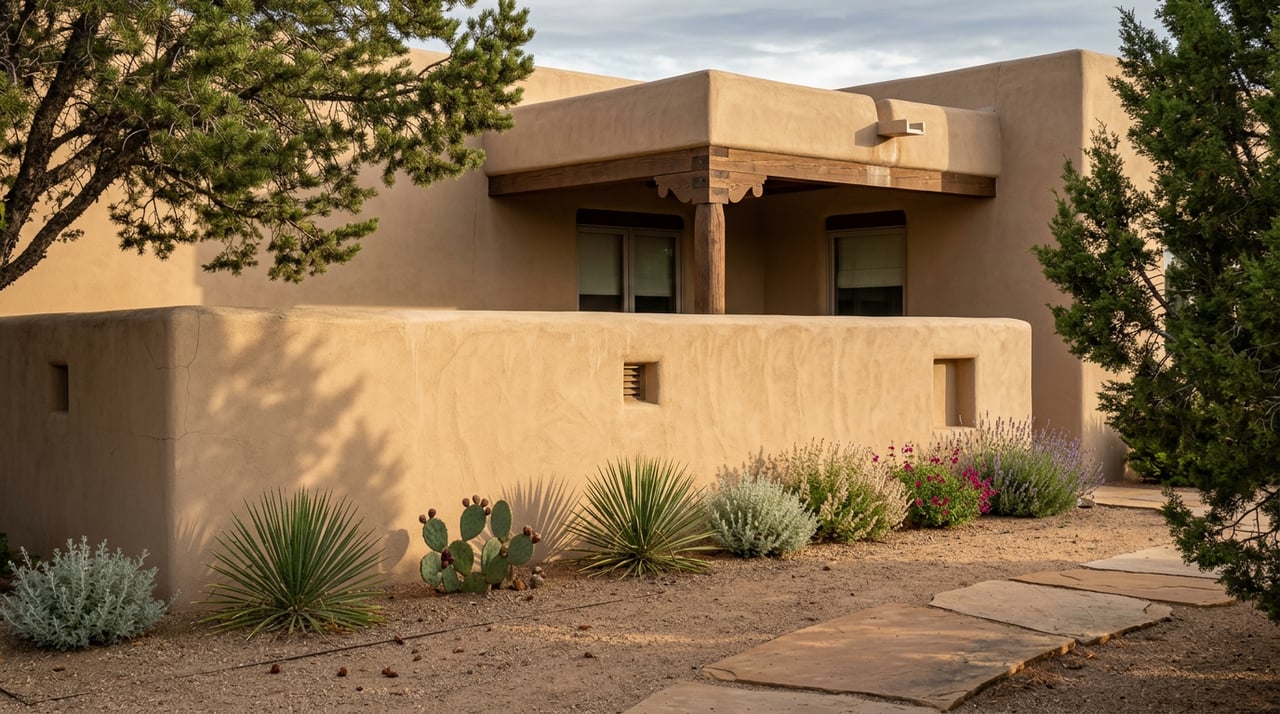
On the Historic Eastside, you see Pueblo Revival, Spanish Pueblo, and Territorial Revival details: flat roofs, vigas, plastered adobe walls, kiva fireplaces, portals, and enclosed courtyards. Much of this look was shaped by early 20th-century regionalism and architects like John Gaw Meem, and it continues to define the area’s identity today. For historical context on Santa Fe’s architecture, visit the National Park Service’s overview.
Because much of the Eastside sits within the City of Santa Fe’s Historic Districts, many exterior changes require review through the Historic Preservation Division and the Historic Districts Review Board. Plan for added time and design constraints, and be aware that parts of downtown and the Eastside also fall within archaeological review districts that can affect ground disturbance. Learn the process and requirements through the City’s Historic Preservation page.
Old Santa Fe Trail: traditional meets custom
Along Old Santa Fe Trail and near Museum Hill, you will find traditional adobe forms alongside newer custom construction. The housing stock includes more single-level estate homes and site-sensitive builds that take in foothill views. This variety reflects larger parcel sizes and a setting that supports modern interpretations of the Santa Fe style, as highlighted in Forbes’ coverage of Museum Hill.
Trails, gardens, and green space
Dale Ball Trails and foothill access
Santa Fe’s primary in-town foothill network, the Dale Ball Trails, offers nearly 24 to 25 miles of hiking and biking with multiple trailheads. Upper Canyon and Cerro Gordo entries are especially convenient from the Eastside, while several trailheads are also a short drive from Old Santa Fe Trail. Study the map and access points via the Santa Fe Conservation Trust.
Botanical Garden and curated spaces on the Hill
If you love a morning loop through a cultivated landscape, Museum Hill is unique. The Santa Fe Botanical Garden features Arroyo Trails, a piñon-juniper woodland, and pedestrian paths, plus ongoing work to link nearby bicycle and pedestrian routes. It is a low-key green space next to the museums, which makes for easy, short walks close to home.
Other nearby open spaces
Both neighborhoods offer quick access to Randall Davey Audubon and Hyde Memorial State Park, with the Eastside’s Upper Canyon Road providing especially direct connections to several trailheads. For a general neighborhood and outdoor overview, see Homes.com’s Santa Fe guide.
Everyday living tradeoffs
Walkability vs car convenience
If you prefer to park once and walk to galleries, dinner, and Plaza events, the Eastside excels. Expect more visitor activity near Canyon Road, especially during peak season and special events. If you want a quieter setting with larger lots, more views, and a museum-centric lifestyle, Old Santa Fe Trail and Museum Hill deliver that, although you will usually drive a few minutes for groceries and most dining. Museum and garden access details are available on the MOIFA directions page.
Parking, events, and permits
Canyon Road and the Plaza host frequent events, which can affect traffic and parking on certain days. If you plan to renovate or host gatherings, research neighborhood precedents and City processes. Properties within Historic Districts follow a defined review path for many exterior changes. Learn about applications and guidance through the City’s Historic Preservation page.
Utilities and large-lot considerations
On large parcels along Old Santa Fe Trail, utilities can differ from in-town services. Some estates may use wells and septic systems, which adds steps to due diligence. Confirm water rights, well status, septic permits, driveway easements, and access before closing. The County’s Assessor’s Help Guide is a good starting point for understanding parcel records.
Which neighborhood fits you?
- Choose Old Santa Fe Trail/Museum Hill if you want space, privacy, foothill views, and immediate access to museums and a curated garden setting. You accept a short drive to the Plaza and Canyon Road.
- Choose the Historic Eastside if you want to walk to galleries, restaurants, and the Plaza, and you value historic character and a lively cultural rhythm. You accept smaller lots and added review steps for many exterior changes.
Buyer tour checklist
Use this quick list when you compare homes in both areas:
- Walk the block at the times you care about. Gauge visitor flow, noise, and parking demand, especially near Canyon Road events. Refer to the Canyon Road neighborhood overview.
- Ask for parcel maps, legal lot size, easements, and right-of-way details. Confirm any wells, septic systems, and permit status. See the County’s Assessor’s Help Guide.
- If the property is in a Historic District, review prior approvals and clarify what changes require Historic Districts Review Board attention. Start with the City’s Historic Preservation resources.
- Confirm trail and green space access. Note the nearest Dale Ball trailheads and Museum Hill garden entrances. Check maps through the Santa Fe Conservation Trust and Santa Fe Botanical Garden.
- Evaluate views and sun exposure. Museum Hill lots can offer wider panoramas. Eastside courtyards often prioritize shelter and privacy. For context on Museum Hill’s siting and views, see Forbes’ feature.
- If resale or short-term rental is part of your plan, research City rules and neighborhood precedents through Historic Preservation and related City resources.
Next steps
Santa Fe offers two distinct ways to live close to the arts. Whether you are drawn to the serenity and space of Old Santa Fe Trail or the on-foot rhythm of the Eastside, the right home will fit your routines as well as your style. If you want a tailored search, clarity on historic review, or a private tour plan that compares both areas side by side, reach out for concierge-level guidance.
Let’s connect and align your search with how you actually live in Santa Fe. Start your journey with Rachele Griego.
FAQs
How close is Museum Hill to the Plaza and Canyon Road?
- Museum Hill is typically a short drive to downtown and Canyon Road, often in the 1 to 2.5 mile range depending on your route, with travel guides describing single-digit minute drives, as noted by Forbes.
What renovation rules apply on the Historic Eastside?
- Many exterior changes in the City’s Historic Districts require review by the Historic Preservation Division and the Historic Districts Review Board, and some areas also have archaeological review; see the City’s Historic Preservation resources.
How big are lots along Old Santa Fe Trail?
- Larger parcels are common, with many homes on about one acre or more and multi-acre estates present; always confirm exact acreage and boundaries through County records using the Assessor’s Help Guide.
Which neighborhood has better trail access?
- Both have quick access to the Dale Ball Trails, but the Eastside sits closest to Upper Canyon and Cerro Gordo trailheads; review maps via the Santa Fe Conservation Trust.
Can I run a short-term rental in these areas?
- Short-term rental rules vary by location and property type; before you buy, review City processes and neighborhood precedents, starting with Historic Preservation guidance and related City resources.
