Craving wide‑open sky, quiet, and privacy without giving up Santa Fe’s culture and restaurants? If you are picturing a place where mountain views fill your windows and trails start close to home, Tano Road, Las Dos, and La Tierra are worth a close look. These rural neighborhoods draw you in with space, light, and a true retreat feel, all within routine driving distance of the Plaza and the Santa Fe Opera. In this guide, you’ll learn how the setting lives day to day, what to expect from lots and architecture, and the key practical checks to make your purchase smooth and informed. Let’s dive in.
Location and setting
Set on Santa Fe’s northwest and northeast outskirts, Tano Road, Las Dos, and La Tierra form a cluster of view-driven enclaves around and northeast of the Las Campanas corridor, with convenient connections to Camino La Tierra and NM‑599. You get a quiet, rural atmosphere with large lots and quick access back into town. For a concise neighborhood overview of how these areas relate to the larger Santa Fe map, see this helpful summary on santafe.com.
At roughly 7,000 feet above sea level, Santa Fe’s high-elevation setting shapes everyday life with cooler evenings, clear air, and striking light. That elevation also contributes to long sightlines and excellent star-viewing conditions that many buyers seek out. You can get a feel for the climate context via Santa Fe’s high-altitude profile.
What retreat living feels like
Views and night skies
Big-sky panoramas define these neighborhoods. Many homes frame the Sangre de Cristo Mountains to the east and long-range vistas toward the Jemez and Cerrillos to the west. Portals, terraces, and low-profile landscape design help you live in the view every day. For a grounded sense of the setting and property styles, explore the neighborhood guide to Tano Road, Las Dos, and La Tierra.
Evenings are a highlight. The combination of dry air and elevation supports stargazing from private terraces with shielded, warm-tone lighting. Many owners plan a simple star terrace or roof deck for quiet, after-dinner time under the sky, inspired by Santa Fe’s climate and clear-night reputation.
Trails and riding
If you love to get outside, you will appreciate how close these areas are to well-known trail systems. The Dale Ball Trails offer nearly 25 miles of linked routes for hiking and mountain biking close to town, with maps and stewardship provided by the Santa Fe Conservation Trust. See the Dale Ball Trails overview for details and access points.
You are also near the La Tierra Trails, a large multi-use recreation area with signed routes and trailhead parking, popular for daily rides and runs. For equestrians, formal services are available a short drive away at The Club at Las Campanas, which offers an equestrian center with boarding, instruction, and trail access. You can preview amenities through the club’s profile on goprivategolf.com.
Culture within reach
These neighborhoods balance privacy with easy access to Santa Fe’s cultural scene. The Plaza’s galleries and restaurants are within routine driving distance, and the Santa Fe Opera’s hilltop campus is an anchor for seasonal performances. Many residents plan their weeks around quiet mornings at home and evenings in town when the calendar calls.
Homes, lots, and architecture
Lot sizes and site patterns
A defining feature here is space. Parcels often range from about a half acre to 10 acres or more, which allows for detached guest houses, barns or turnouts, and intentional outdoor rooms. Building pads are typically sited to preserve sightlines, privacy, and solar orientation. You can see how brokers describe these patterns in this neighborhood overview.
Architecture that suits the land
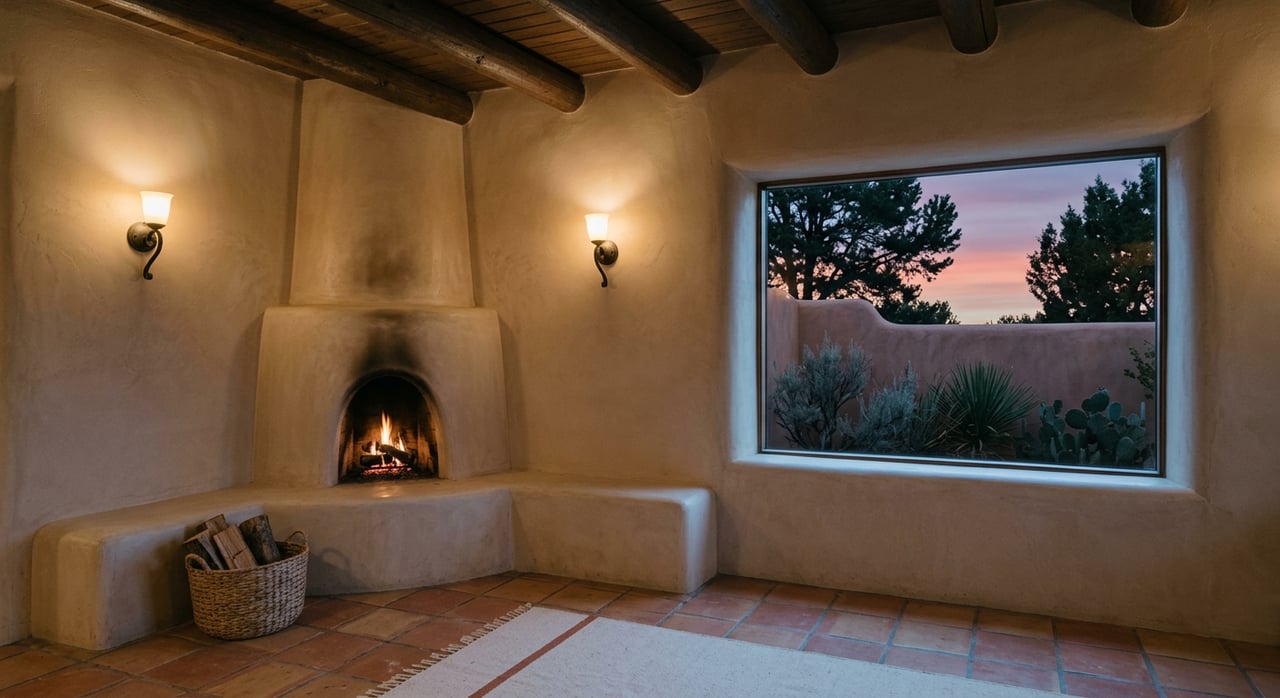
You will find both traditional and contemporary interpretations of Northern New Mexico design. Pueblo Revival and Territorial cues show up in stucco or adobe finishes, vigas, kiva fireplaces, portals, and courtyards. Many newer homes mix these elements with larger panes of glass to frame views while keeping low, horizontal massing that settles into the landscape. For context on regional styles, explore this illustrated primer on Santa Fe’s architectural vocabulary.
Design ideas for your retreat
Consider these high-impact moves as you plan or refine a home here:
- Orient for light and views. Create a breakfast porch to the east for soft morning sun, and a shaded portal or terrace to the west for sunset.
- Build outdoor rooms. Think dining terrace, covered lounge, and a compact “star deck” with low, shielded lighting to protect night vision.
- Use drought-tolerant planting and water-wise systems. Rainwater capture and smart irrigation are common-sense strategies in this high desert. Browse a digest of water-conscious tools and examples in the Gaining Ground resource library on rainwater harvesting and landscaping standards and confirm local codes before you build.
Market patterns to expect
Inventory spans from vacant land to custom estates. In practice, pricing is driven more by lot size, views, orientation, and infrastructure than by the neighborhood name alone. Expect micro-differences from parcel to parcel, especially with approach roads, driveway length, well status, and privacy buffers. Use current local MLS data when you are ready to evaluate a specific property, since offerings and status change frequently.
A quick value-focused lens helps as you compare options:
- Views and orientation. Are the primary rooms and outdoor spaces sited for the mountains, sunrise, or sunset you prefer?
- Approach and access. Is the road paved or unpaved, and who maintains it? How does winter weather affect the route?
- Water and wastewater. What is the water source, and what documentation exists for well and septic systems?
Practical due diligence
Water and wastewater
Many properties outside the city limits rely on private or shared wells and on-site septic systems. Build in time to review well logs, shared-well agreements, and water quality tests. For septic, request records and an inspection early in escrow. These items are essential to understanding long-term maintenance and capacity.
Power, gas, and services
Utilities vary by parcel. Some subdivisions have underground utilities and community services, while more rural lots may use delivered propane or fully electric systems. Confirm power, gas, and internet options with the provider list for each address before you finalize an offer.
Roads and winter care
Approaches range from county-maintained pavement to private gravel lanes. Clarify maintenance responsibility, plowing arrangements, and any private road agreements. In winter, shaded stretches and drive grades can influence access, so factor in your vehicle type and commute patterns.
Wildfire awareness and planning
Santa Fe’s outskirts include wildland-urban interface zones. Plan for defensible space, ember-resistant vents, and regular fuels reduction around structures. Ask for a home hazard assessment and review local wildfire planning resources, such as this compilation of community wildfire readiness materials, as you evaluate each property.
Zoning, HOAs, and horses
Zoning is county-level and parcel-specific. Many properties support horses or small-scale agricultural uses, but rules vary, and deed restrictions or HOA covenants may apply. If keeping horses on-site is important, verify allowable animal units, setbacks, manure management, and water supply requirements with Santa Fe County. For boarding and instruction, the equestrian center at Las Campanas offers full services, which can supplement or replace on-site facilities.
A day in the life
Picture an easy morning with coffee on an east-facing porch while the Sangres pick up the first light. Midday, you step out for a trail loop or a bike ride on nearby routes, then return to a shaded portal for a late lunch. As evening arrives, you slip downtown for a gallery opening or a performance, then come home to a quiet terrace under crisp stars. This rhythm is what draws many to Tano Road, Las Dos, and La Tierra.
Ready to explore
If retreat living close to Santa Fe’s culture sounds like your next chapter, a local guide will make the search more precise and far easier. From matching views and microclimates to reviewing wells, septic, and road agreements, you deserve calm, concierge-level support every step of the way. Connect with Rachele Griego to start a tailored tour and compare the best options for your goals.
FAQs
How far are Tano Road, Las Dos, and La Tierra from downtown Santa Fe?
- These areas are within routine driving distance of the Plaza and major cultural venues, and many residents consider it a short drive, though exact times vary by parcel and route.
Can you keep horses on properties in these neighborhoods?
- Often yes, but you should confirm county zoning, deed restrictions, and any HOA rules for each parcel; if you prefer full services, the equestrian center at Las Campanas provides boarding and instruction nearby.
What utilities are typical for homes outside Santa Fe city limits near Las Dos?
- Expect private or shared wells and on-site septic on many parcels, with power, gas, and internet availability varying by lot; verify provider options, well logs, and septic records during due diligence.
What should you know about wildfire risk in the northwest Santa Fe county area?
- These neighborhoods border wildland areas, so plan for defensible space and home hardening, and request a hazard assessment while reviewing local resources on community wildfire readiness.
Are there HOAs or club memberships to consider in Tano Road, Las Dos, and La Tierra?
- Las Campanas is a gated, membership-based community with its own structures, while many parcels in Tano Road, Las Dos, and La Tierra sit outside that framework; always confirm CCRs or HOA documents for any specific property.
What are common lot sizes in these neighborhoods?
- Parcels often range from about a half acre to 10 acres or more, which allows room for guest houses, barns or turnouts, privacy landscaping, and generous outdoor living spaces.
