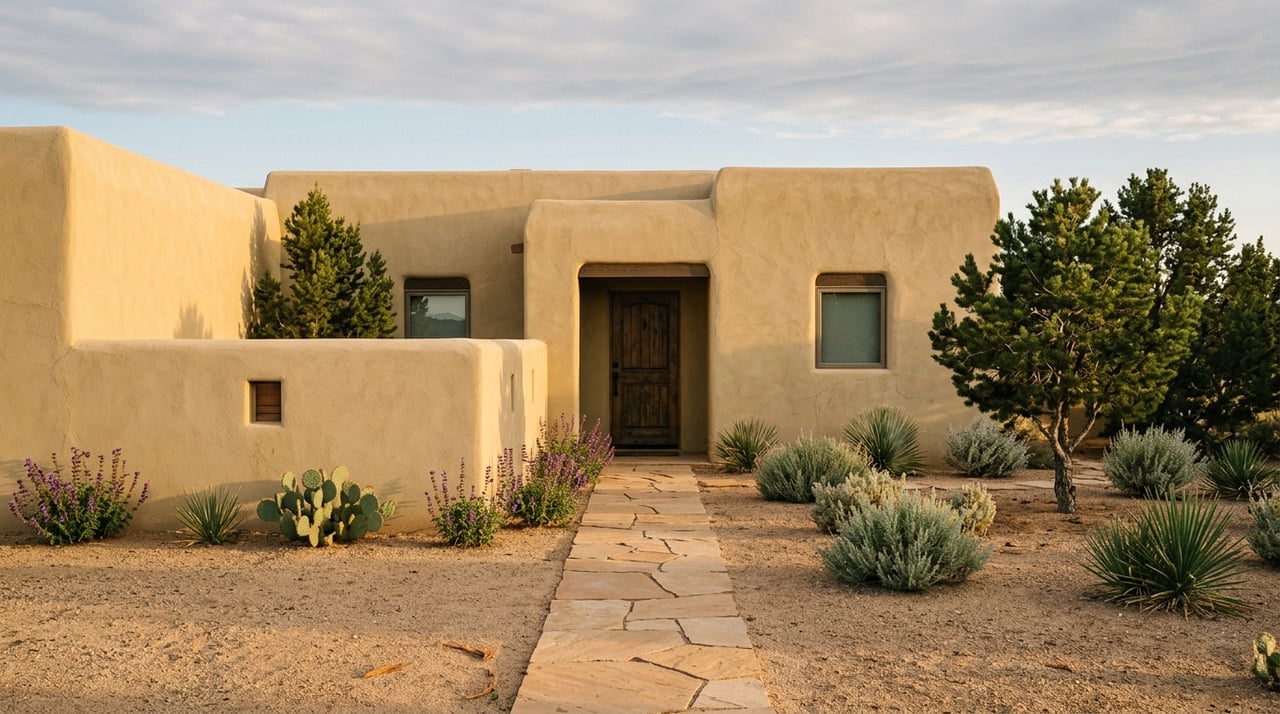
If you are looking for a Santa Fe neighborhood that feels connected to the landscape from the moment you arrive, Sierra del Norte stands out. Tucked into the foothills northeast of downtown, this area offers a very different experience from more central parts of the city. You get a closer relationship to trails, views, and larger lots, along with a market that reflects that lifestyle. Let’s take a closer look.
Sierra del Norte at a Glance
Sierra del Norte sits off Hyde Park Road in the foothills northeast of downtown Santa Fe. The setting is one of its defining features, with homes placed across slopes, ravines, and ridge-adjacent sites rather than within a compact, uniform subdivision.
That physical layout shapes how the neighborhood feels day to day. Instead of a dense in-town pattern, Sierra del Norte reads more like a foothills estate area, where privacy, setback, and landscape integration often matter as much as interior square footage.
Why Foothills Living Appeals
For many buyers, Sierra del Norte offers a version of Santa Fe living that is closely tied to open space. The neighborhood is associated with trail access, broad views, and a quieter, more tucked-away atmosphere than you typically find closer to the Plaza or other central areas.
A current foothills trail map places this area within a larger trail system that rises from about 6,940 to 9,121 feet and includes more than 60 miles of trails across the Santa Fe foothills. The same map highlights panoramic views toward the Rio Grande Valley and the Sangre de Cristo Mountains, which helps explain the neighborhood’s lasting appeal.
Trail Access Near Home
One of Sierra del Norte’s biggest lifestyle advantages is its proximity to the Sierra del Norte Trailhead, also known as the Corral. This is the main access point for the north Dale Ball Trail system.
The Santa Fe Conservation Trust describes Dale Ball as a nearly 25-mile natural-surface trail network with links to La Piedra, Little Tesuque, Santa Fe Canyon Preserve, Dorothy Stewart, and Atalaya trails. SFCT also notes that the north Dale Ball loop near Sierra del Norte is an easier section popular with dog walkers, hikers, and runners, while the central section offers easy-to-moderate hiking and mountain biking in piñon-juniper forest.
For you, that can mean a simpler daily routine. Instead of planning every outing around a drive to a separate trailhead, you may be able to step into outdoor recreation much closer to home.
What the Homes and Lots Feel Like
Sierra del Norte is best understood as a neighborhood of varied foothills properties rather than one consistent housing type. A City of Santa Fe wildfire hazard assessment described the area as having 1-to-5-acre lots, steep slopes and ravines, hydrants, and homes that tend to sit mid-slope or on ridge tops.
Even though that city report is older, it still offers a useful structural picture of the terrain and parcel pattern. In practical terms, it means that homesites can feel quite distinct from one another, and the land itself is often a major part of the property’s value and character.
Architectural Character
Recent listing snapshots show a mix of traditional New Mexican, Pueblo, Territorial, and contemporary interpretations. Listing descriptions frequently mention features such as vigas, kiva fireplaces, adobe, frame, and stucco construction, along with flat or metal roofs.
That architectural mix matters because buyers here are often drawn to more than size alone. In Sierra del Norte, design character, relationship to the land, and the way a home captures privacy or views can play a major role in appeal.
Sierra del Norte Market Insight
From a pricing standpoint, Sierra del Norte sits in a premium segment of the Santa Fe market. Realtor.com’s October 2025 neighborhood snapshot reported a median home sale price of $949,000, with 10 active listings and active listings up 36.36% year over year.
That figure places the neighborhood above broader Santa Fe benchmarks. It suggests that buyers are paying not only for the home itself, but also for the foothills setting, larger lots, and the overall lifestyle the area provides.
How It Compares to Santa Fe Overall
Santa Fe’s broader market has shown signs of becoming more balanced, though still expensive by many standards. SFAR’s Q4 2025 city and county report showed an all-property median sales price of $660,000, a single-family median of $710,000, inventory at 568 homes, months supply at 3.5, and days on market at 62.
Fresh spring 2026 benchmarks point in a similar direction, though each data source uses different methods. Redfin reported a Santa Fe city median sale price of $550,000 in March 2026, Zillow reported a Santa Fe County average home value of $551,954 and median sale price of $569,500 as of February 28, 2026, and Realtor.com’s county page showed about 1.4K homes for sale, a median listing price of $745,000, about 60 days on market, and sellers typically getting 98% of list price.
The key takeaway is not that these numbers match exactly, because they do not. It is that Sierra del Norte consistently reads as an upper-tier foothills pocket within the wider Santa Fe market.
How Sierra del Norte Differs From In-Town Areas
Sierra del Norte offers a different rhythm than more central Santa Fe neighborhoods. It is more acreage-driven, more trail-oriented, and more focused on privacy.
That difference is reflected in the neighborhood’s trailhead access and larger lot pattern. It is also reflected in Redfin’s current Walk Score of 0, which supports the idea that this is a more car-dependent location where buyers often prioritize views, seclusion, and open-space access over proximity to a traditional pedestrian environment.
The Tradeoffs to Understand
For the right buyer, the tradeoffs are worth it. You may gain a stronger sense of retreat, easier access to foothills recreation, and a property that feels more connected to the landscape.
At the same time, hillside access, driving for daily errands, and ongoing property stewardship are part of the picture. Sierra del Norte tends to appeal most to buyers who value place, privacy, and natural surroundings enough to make those tradeoffs feel intentional.
Wildfire Preparedness Matters Here
Because Sierra del Norte is a foothills wildland-urban interface neighborhood, wildfire preparedness should be part of your planning. The City of Santa Fe says wildfire risk is year-round and generally peaks from March through June.
The city also offers free home hazard assessments and the Know Your Zone app, while Santa Fe County provides defensible-space guidance. A historical city hazard assessment classified Sierra del Norte as a high-hazard neighborhood and recommended a fuelbreak along Sierra Del Norte Road.
This does not make Sierra del Norte unusual for the foothills, but it does mean buyers and owners should approach the neighborhood with clear expectations. If you are considering a purchase here, it helps to evaluate not just the house and view, but also access, vegetation management, and your comfort with seasonal preparedness.
Who Sierra del Norte Fits Best
Sierra del Norte tends to resonate with buyers who want Santa Fe to feel immersive rather than simply convenient. If you picture morning trail access, a stronger sense of separation from the city, and a home that sits naturally within the terrain, this neighborhood may be a strong match.
It can also appeal to second-home buyers and relocators who want privacy and architectural character in a setting that feels distinctly Santa Fe. The neighborhood is less about uniformity and more about finding the right parcel, the right outlook, and the right relationship between home and landscape.
What to Watch When Buying or Selling
If you are buying in Sierra del Norte, it is wise to look beyond headline square footage and bedroom count. In this neighborhood, value can be shaped by factors such as lot usability, slope, views, trail proximity, privacy, and how well the home’s design responds to the site.
If you are selling, presentation matters for the same reason. Buyers are often responding to a full lifestyle story here, including architecture, setting, and the sense of retreat that a property provides.
Sierra del Norte is one of those Santa Fe neighborhoods where context carries real weight. When you understand both the market signals and the foothills lifestyle, you are in a much better position to make a smart and confident move.
If you are considering a move in Sierra del Norte or want a more tailored read on how this foothills market fits your goals, Rachele Griego offers the local insight and concierge-level guidance to help you navigate it with clarity.
FAQs
What is Sierra del Norte like in Santa Fe?
- Sierra del Norte is a foothills neighborhood northeast of downtown Santa Fe known for larger lots, privacy, trail access, views, and a more landscape-driven feel than central in-town areas.
What trails are near Sierra del Norte in Santa Fe?
- Sierra del Norte is near the Sierra del Norte Trailhead, also called the Corral, which connects to the north Dale Ball Trail system and the broader Santa Fe foothills trail network.
How much do homes cost in Sierra del Norte?
- Realtor.com’s October 2025 neighborhood snapshot reported a median home sale price of $949,000 in Sierra del Norte, placing it above broader Santa Fe market benchmarks.
Are Sierra del Norte homes on large lots?
- Yes. A City of Santa Fe hazard assessment described Sierra del Norte as having roughly 1-to-5-acre lots, with homes often positioned on slopes, ravines, or ridge-oriented sites.
Is Sierra del Norte walkable?
- Sierra del Norte is generally more car-dependent than central Santa Fe locations. Redfin lists the neighborhood with a Walk Score of 0, which aligns with its foothills setting and lower-density layout.
What should buyers know about wildfire risk in Sierra del Norte?
- Sierra del Norte should be approached as a foothills wildland-urban interface neighborhood, where year-round wildfire awareness, defensible-space planning, and home hazard assessment are important parts of ownership.
Who is Sierra del Norte best for?
- Sierra del Norte is often a fit for buyers who value privacy, trail access, architectural character, and a strong connection to the foothills landscape over in-town convenience.
