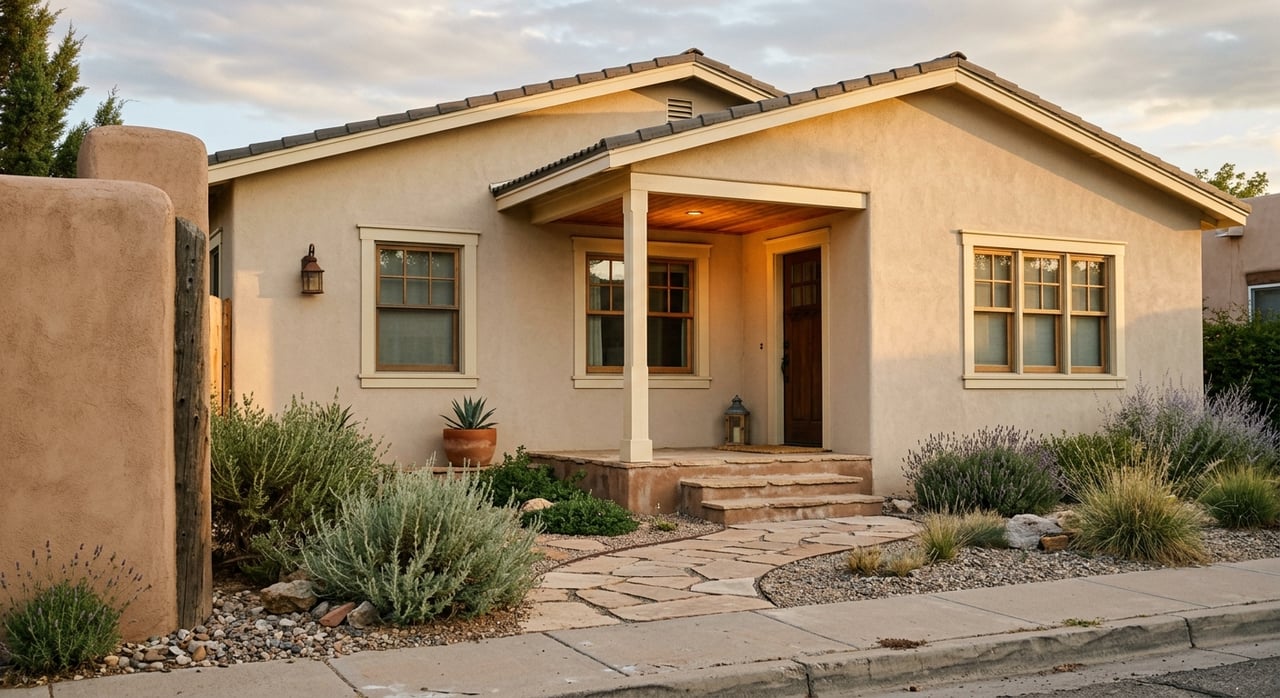
If you are drawn to Santa Fe for its character, South Capitol often feels like the neighborhood where that character becomes part of daily life. You may be looking for a classic adobe, a bungalow with a welcoming porch, or a central home base close to downtown rhythms without giving up a residential feel. In South Capitol, that mix is part of the appeal, and understanding it can help you buy or sell with more confidence. Let’s take a closer look.
Why South Capitol Stands Out
South Capitol sits within Santa Fe’s central core, with strong ties to the Don Gaspar District and the nearby Historic Transition District. City materials identify Don Gaspar as part of the larger South Capitol neighborhood, and that historic framework helps explain why the area feels layered, established, and distinctly local.
The neighborhood’s development reflects several eras of Santa Fe history. In Don Gaspar, the city notes railroad-era growth from about 1890 to 1930 on a tightly knit planned grid. In the Historic Transition District, homes along Agua Fria Street and the old Camino Real evolved over time and had become architecturally diverse by the mid-1950s.
For you, that means South Capitol is not defined by one look or one moment in time. It is a neighborhood where older Santa Fe forms, early 20th-century houses, and later adaptations exist side by side in a way that feels organic rather than staged.
South Capitol Architecture at a Glance
South Capitol is often appealing because the housing stock offers variety without losing a sense of place. Official and local sources point to a mix of traditional adobe-derived forms, Pueblo Revival, Territorial, Mission Revival, and bungalow architecture throughout the area.
The City of Santa Fe describes Santa Fe style as stucco façades with rounded corners that emulate adobe construction. That detail matters because it speaks to how strongly adobe-derived design shapes the visual identity of the city and, by extension, the experience of living in South Capitol.
The National Park Service describes the Don Gaspar Historic District as reflecting three phases of New Mexico architecture. Those phases include traditional adobes, eastern American residential styles introduced during the railroad era, and later revivals of traditional New Mexico architecture.
Classic Adobes and Adobe-Derived Homes
If you picture Santa Fe as soft stucco walls, rounded corners, and earth-toned forms that sit naturally within the landscape, you are thinking of the design language that has long defined this area. In South Capitol, classic adobe and adobe-inspired homes contribute much of that visual continuity.
These homes often appeal to buyers who want architectural authenticity and a strong sense of Santa Fe identity. For sellers, that character can be a major asset when it is presented thoughtfully and with an understanding of the home’s place within the neighborhood’s historic fabric.
Bungalows and Early 20th-Century Charm
South Capitol is not only about adobe. The area also includes California Bungalows and other early 20th-century homes, which broadens the neighborhood’s appeal for buyers who want something a little different while staying close to the city center.
Tourism Santa Fe describes South Capitol as a largely residential mix of condos, homes, and apartments with early 20th-century architecture, porches, and small lawns rather than high walls and gates. That detail helps paint a clear picture of the streetscape. It often feels open, approachable, and connected to everyday life.
A Mix That Supports Different Lifestyles
One of South Capitol’s strengths is that it does not offer just one ownership experience. Alongside preservation-minded historic homes, the neighborhood also includes condos and apartments, giving buyers a broader range of ways to live in a central Santa Fe location.
That can matter if you are relocating, purchasing a second home, or downsizing into something with a simpler footprint. It also matters if you are selling, because the buyer pool may include people drawn by architecture, convenience, or a combination of both.
What Daily Life Feels Like
South Capitol’s day-to-day appeal comes from its centrality. Downtown Santa Fe and the Guadalupe District are described by the city as the cultural and commercial heart of Santa Fe, with arts and culture, retail, food and beverage, tourism, and locally owned small businesses concentrated there.
For many residents, that means short trips shape everyday life. You are not choosing South Capitol only for a house style. You are also choosing proximity to the places that define much of Santa Fe’s daily rhythm.
Near Downtown and the Railyard
The Railyard is one of the area’s biggest lifestyle anchors. Tourism Santa Fe describes it as a hub for shopping, meals, festivals, concerts, movies, the Farmers Market, and contemporary art galleries.
That kind of access can make a real difference in how you use your neighborhood. Whether you enjoy morning errands, weekend events, or simply having activity nearby, South Capitol offers a residential setting with quick access to some of the city’s most active destinations.
Parks and Green Space
The nearby Railyard Park adds another layer to the neighborhood experience. It is a 13-acre green space with 28 gardens, rotating public art, a children’s play area, and free year-round events.
For buyers, that can add value beyond square footage. For sellers, it helps explain why South Capitol often appeals to people looking for both central convenience and access to outdoor public space.
Transit and Connections
The South Capitol Rail Runner station is another practical advantage. Rio Metro identifies it as a major stop with access to the Santa Fe Plaza, State Capitol, and government offices, along with bus connections, ADA access, and bicycle lockers.
If you commute, travel within the city, or simply value transportation options, that connectivity is worth noting. In a neighborhood conversation, access is part of the lifestyle story.
Historic District Rules to Know
If you are considering a purchase in South Capitol, it is important to understand that historic district rules may affect exterior changes. The City of Santa Fe’s Historic Preservation Division helps owners in the city’s five historic districts and administers the review process for historic and archaeological districts.
That means remodeling is not always as simple as hiring a contractor and getting started. Owners who want to modify properties in a historic district must file an application, and some changes are reviewed by the Historic Districts Review Board rather than handled administratively.
What Types of Changes May Be Reviewed
The city specifically identifies several common changes that may be reviewed for historic integrity, including:
- Additions
- Wall or fence construction
- Door replacement
- Window replacement
This does not mean change is impossible. The city’s preservation materials emphasize a balance between protecting historic character and allowing some flexibility for owners to modify homes and properties.
Why This Matters for Buyers and Sellers
For buyers, historic review is part of due diligence. If you hope to update a façade, replace windows, or expand a structure, it is wise to understand the process early.
For sellers, preservation context can shape how your property is positioned in the market. A home’s historic character, prior updates, and future possibilities are often best presented with clarity and care, especially in a neighborhood where architectural identity carries real weight.
Who South Capitol May Suit Best
South Capitol can be a strong fit if you want a central Santa Fe location with architectural variety and a neighborhood feel. You may be drawn to the area if you value older homes, established streets, and access to downtown, the Railyard, parks, and transit.
It may also appeal to you if you want options. Some buyers are searching for a preservation-minded adobe, while others want the charm of a bungalow or the relative ease of a condo in a central area. South Capitol supports that range better than many neighborhoods that feel more uniform.
Why Local Guidance Matters Here
In South Capitol, details matter. Architecture, historic district boundaries, preservation review, and block-by-block character can all shape the right decision.
That is where local, preservation-aware guidance becomes especially valuable. Whether you are preparing a historic home for market or trying to understand which property best fits your lifestyle and plans, nuanced neighborhood knowledge can help you move forward with confidence.
If you are considering buying or selling in South Capitol, Rachele Griego offers thoughtful Santa Fe expertise, concierge-level service, and a deep understanding of the city’s historic neighborhoods.
FAQs
What is South Capitol in Santa Fe known for?
- South Capitol is known for its central location, historic character, and mix of home styles that includes adobe-derived homes, Pueblo Revival, Territorial, Mission Revival, and bungalows.
How close is South Capitol to downtown Santa Fe?
- South Capitol is part of Santa Fe’s central core, with downtown, the Plaza, the Railyard, and the Guadalupe District serving as nearby daily-use anchors.
What kinds of homes are common in South Capitol?
- The neighborhood includes historic adobes, bungalow-style homes, other early 20th-century houses, plus a mix of condos, homes, and apartments.
Are there historic district rules in South Capitol Santa Fe?
- Yes. In historic district areas, exterior changes may require an application and review through the City of Santa Fe’s preservation process.
What exterior updates may be reviewed in South Capitol historic districts?
- Common reviewed changes include additions, wall or fence construction, and door or window replacement.
What amenities support daily life in South Capitol?
- Daily life is shaped by access to downtown businesses, the Railyard’s shops and events, Railyard Park, and the South Capitol Rail Runner station.
Is South Capitol a good fit for buyers who want different housing options?
- Yes. South Capitol offers a broad mix of historic homes, bungalows, condos, and apartments in one central neighborhood setting.
