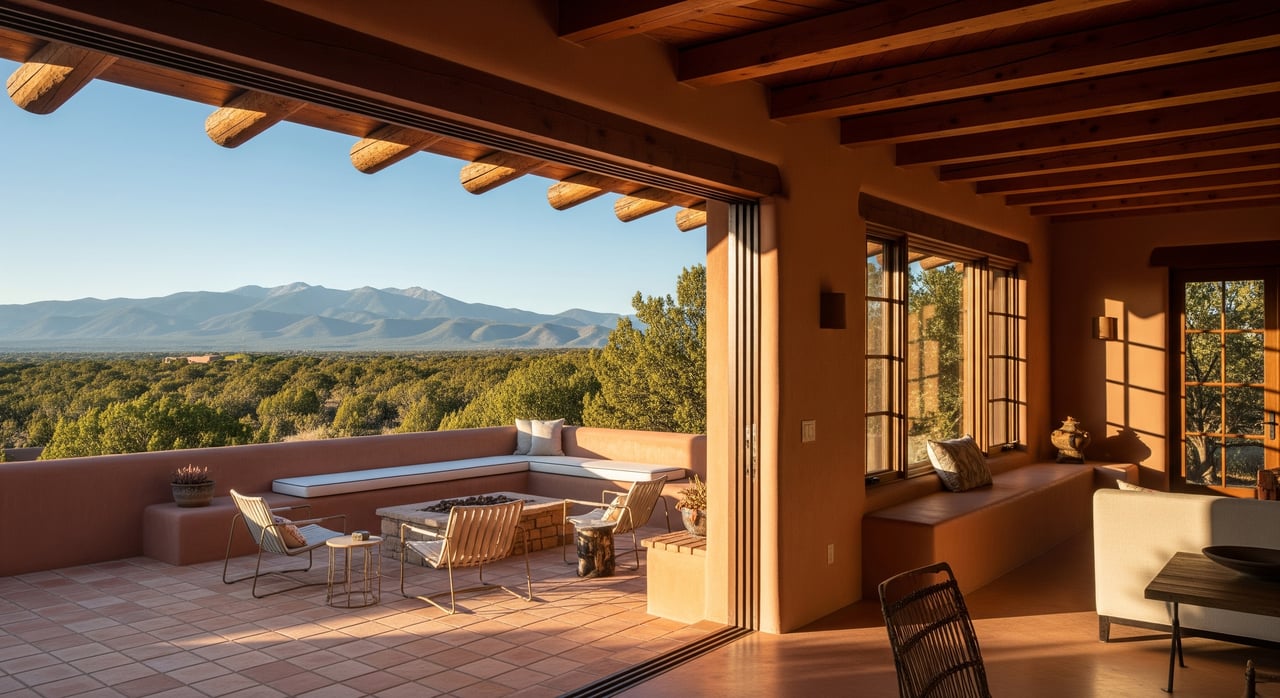
A sweeping mountain view can feel like magic in Santa Fe, and the right natural light can make a home glow all day. Yet not all “view lots” are created equal, and light behaves differently here than in many other places. If you are buying or selling, understanding how views and light work in our high-desert climate can help you make confident decisions.
In this guide, you will learn how to evaluate a view lot, what affects the permanence of a view, how Santa Fe’s sun path influences comfort and energy use, and the due diligence that protects your investment. Let’s dive in.
What makes a Santa Fe view lot
Santa Fe sits at roughly 7,200 feet on a high plateau, framed by the Sangre de Cristo Mountains with other ranges on the horizon. The terrain shifts quickly across ridges, mesas, and arroyos, so view quality can change over very short distances.
A “view lot” is a parcel whose value is materially increased by an unobstructed vista, such as mountain peaks, open space, or city lights. The premium depends on both desirability and how likely that view is to endure.
What creates view value
- Topography. Ridge or mesa positions often deliver broad, unobstructed panoramas. Valley settings may have partial views but better wind protection.
- Protected edges. Adjacent public lands, open-space buffers, or conservation easements can enhance perceived permanence.
- Neighboring rights. Zoning, setbacks, and allowed building heights on nearby parcels influence future sightlines.
- Community rules. HOA covenants and design guidelines can limit building height, siting, and exterior elements that affect views.
- Nightscapes. Clear skies and distance from dense lighting can create prized city-light or starry-sky views.
How permanent is a view
Views are rarely guaranteed. Permanence improves when steep, unbuildable terrain, recorded conservation or view easements, or restrictive CC&Rs surround you. Otherwise, new construction, maturing vegetation, or planned development on nearby parcels can change what you see. Always confirm current zoning and permitted heights of neighboring lots before you commit.
How light behaves in Santa Fe
Santa Fe’s high-desert climate has abundant sunshine, clear air, and pronounced seasonal sun angles. At our elevation, sunlight feels bright, and ultraviolet exposure is higher than at lower altitudes. These conditions influence comfort, glare, and energy performance.
Orientation basics
- South-facing windows. Favorable in winter for passive heating and consistent daylight. With proper overhangs, summer heat gain can be reduced.
- East-facing windows. Bright morning light and quick warm-up, often gentle for living areas and kitchens.
- West-facing windows. Dramatic late-day light and sunset views, but stronger heat gain and potential glare in summer.
- North-facing windows. Soft, even daylight with minimal solar heat gain, helpful for studios or offices.
Design and comfort strategies
- Shade smartly. Eaves, roof overhangs, operable shades, and deciduous trees help manage seasonal sun.
- Balance glass and performance. High-performance glazing can reduce glare and protect finishes from fading.
- Use thermal mass and insulation. In combination with south light, thermal mass helps moderate indoor temperatures.
- Plan view corridors. Place key windows and terraces to frame vistas while limiting west-facing exposure where overheating is likely.
Risks to evaluate on view lots
Before you fall in love with the panorama, verify the practical details that keep it viable.
- Future development. Check zoning, parcel maps, and any pending permits or subdivision plans near the lot.
- Vegetation and growth. Young piñon and juniper can mature into view blockers, as can new landscaping on adjacent lots.
- Slope and soils. Steep sites may require geotechnical review, engineered foundations, retaining walls, and careful drainage.
- Wildfire and defensible space. Many areas sit within the wildland-urban interface. Clearing requirements can change vegetation and insurance costs.
- Utilities and access. Remote or elevated lots may need wells, septic, or longer utility runs. Confirm access and utility easements.
- Night-time privacy and lighting. Elevated homes can feel exposed at night. Plan window treatments and exterior lighting to respect dark skies and privacy.
Due diligence checklist for buyers
- Visit the site at sunrise, midday, sunset, and after dark. If possible, compare winter and summer conditions.
- Gather documents. Plat map, survey, zoning designation, setbacks and height limits, HOA covenants, and any recorded easements, including conservation, view, or solar.
- Confirm nearby rights. Use parcel and zoning data to understand what neighbors can build and where.
- Review prior reports. Ask for landscape plans, geotechnical studies, or concept designs.
- Assess wildfire risk. Review local guidance and consider a mitigation plan for defensible space.
- Commission studies. Obtain a topographic survey and, on sloped sites, a geotechnical report before closing.
- Model the sun path. Use a shadow study or solar-path tool to test window placement and shading.
- Verify insurance. Check availability and estimated premiums for homeowners and wildfire-related coverage.
Marketing checklist for sellers of view lots
- Photograph the view at key times. Capture sunrise, sunset, and night to show how the vista changes through the day.
- Document permanence factors. Summarize adjacent zoning, any open-space or conservation easements, and distance to nearest buildable edges.
- Prepare a clean file. Provide surveys, zoning details, HOA guidelines, and any design approvals that confirm buildable area and height.
- Disclose mitigation. Note wildfire mitigation steps and any ongoing obligations that affect vegetation management.
Neighborhood and setting trade-offs
Different settings offer distinct benefits. Ridgeline and mesa lots can deliver sweeping views but may be windier and more exposed to winter storms. Valley or suburban settings can be more sheltered with easier access to utilities, though views may be easier to block. Lots near open space can offer more enduring vistas along with a higher focus on wildfire preparedness and occasional public trail activity nearby.
If you are considering historic or design-sensitive areas, expect additional review for exterior changes visible from public rights-of-way. HOA communities often regulate building height, siting, and finishes, which can help preserve neighborhood character and view corridors.
Building or remodeling with light in mind
- Right-size overhangs. Tune roof eaves for summer shading of south windows while allowing winter sun to penetrate.
- Tame the west. Use smaller, higher-performance west windows, plus exterior screens or deep porches to manage afternoon heat and glare.
- Frame the best view. Align key rooms to the primary vista, and use corner windows or clerestories to bring light deeper into the plan.
- Protect interiors. Choose materials and finishes that resist UV fading, and plan for operable shading on the brightest exposures.
Costs and insurance to anticipate
Steep access, engineered foundations, and wildfire exposure can raise both construction costs and insurance premiums on certain view lots. Get early input from insurers, engineers, and builders so your budget reflects real site conditions.
Partnering for preservation and comfort
Buying or selling a view lot in Santa Fe is part art and part science. You deserve clear guidance on view permanence, solar comfort, zoning, and design review so you can enjoy the vistas without surprises. A locally rooted, preservation-aware advisor can coordinate the right surveys, studies, and approvals while shaping a plan that honors both the land and your lifestyle.
Ready to explore your options and protect what matters most in your next move? Let’s connect and talk through your goals, timelines, and the neighborhoods that fit.
FAQs
What is a “view lot” in Santa Fe real estate?
- A parcel where unobstructed vistas materially increase value, shaped by topography, nearby zoning, protected open space, and community rules that affect future sightlines.
How can I protect a view or solar access in Santa Fe?
- Confirm and record easements where available, review HOA covenants and setbacks, and verify neighboring height limits; consult local planning staff and a land-use attorney for options.
Does home orientation change comfort and energy use here?
- Yes. South exposure supports winter solar gain, east brings gentle morning light, west can overheat without shading, and north offers soft, even light with minimal heat gain.
What should I check before buying a sloped view lot?
- Commission a topographic survey and geotechnical study, review drainage and retaining needs, confirm access and utilities, and verify zoning and height limits on nearby parcels.
Are view lots more costly to insure or build on?
- They can be. Wildfire exposure and complex access or foundations may raise premiums and construction costs; verify early with insurers and experienced local professionals.
